One Leak, Three Ways to Pay for It. Which One Follows You to Renewal
Abstract. Paying out of pocket, calling for guidance, or filing the claim in full each carry a different renewal cost, and material lead times often decide which one you can afford.
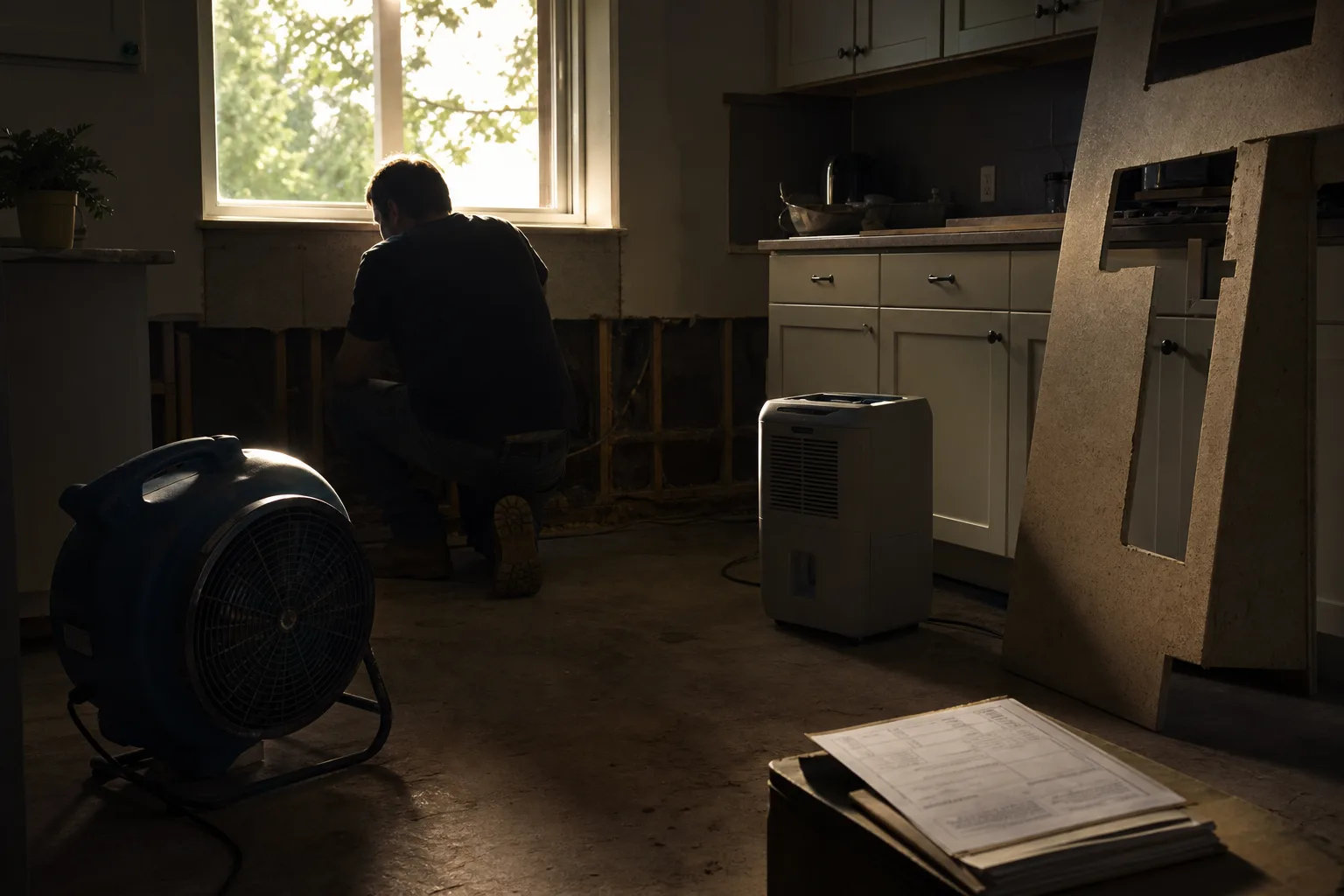
The decision most people get wrong is not whether the damage is covered. It is whether to involve the carrier at all, and that decision usually gets made in the first two hours, standing in a wet hallway with a phone in one hand. What follows is a comparison of the three routes an ordinary household actually has when a loss lands somewhere between the deductible and a catastrophe, judged not on the payout but on what each route does to the next twelve months: the renewal notice, the repair calendar, and the supply chain that has to deliver cabinets, shingles or a compressor before anyone can call the job finished.
Route one: pay it yourself, and price the calendar honestly
Absorbing a loss keeps your claims history clean, and that is a real asset, because claims history is a consumer report in the legal sense, compiled by a third party and read by every underwriter who quotes you. The Federal Trade Commission oversees the fair credit reporting framework these files sit inside, which is why you can request yours and dispute an entry on it. The catch is that self-paying means self-scheduling. No adjuster is chasing anyone, no emergency mitigation vendor arrives at nine that night, and the price you were quoted on Tuesday is good only as long as the supplier holds the material.
That last point does more damage than people expect. A plumber can stop the water in an afternoon, but the finish work waits on whatever is slow that season: engineered flooring in a discontinued width, a tub in a nonstandard size, a specific electrical panel. A four-week lead time on a single item stalls the drywall crew, which pushes the painter into a month he has already sold, which puts you three weeks behind on a job you were paying for out of savings. Self-paying is cheapest when the repair is short, local and made of common parts.
Route two: the guidance-only call, which is rarely as neutral as it sounds
Calling the carrier to ask whether something is covered, without asking for money, feels like the cautious middle. Sometimes it is. But the recording practices vary by company and by state, and an inquiry that gets logged as a loss can appear in your file with a zero-dollar payment attached, which some underwriters treat as a frequency event even though no check was written. If you take this route, ask directly whether the conversation will be recorded as a claim, ask for the answer in writing, and keep the name of the person who gave it.
Done carefully, it buys you something valuable: a read on your own policy language before you commit. Ask which coverage would apply, what the deductible is on that specific peril, whether depreciation is held back and how long you have to recover it, and whether the carrier requires preapproval to substitute a material that is out of stock. That last question is the one nobody asks and everybody needs. Substitution rules decide whether your contractor can proceed with an equivalent product in week two or has to wait for an adjuster's sign-off in week five.
Route three: file it fully, and use the machinery you are paying for
A full claim brings a schedule with it. Mitigation vendors are dispatched, drying equipment shows up and stays until the moisture readings drop, and an estimate is written on software the trades already recognize. On a loss with a real structural component, that machinery is worth more than the check, because it compresses the part of the job that is normally hostage to whoever answers the phone. Supplemental payments exist precisely for the case where opened walls reveal more, or where the original material has been discontinued and the replacement costs more than the estimate assumed.
The cost is that the claim is permanent, visible, and read alongside every other claim in the file. One water loss on an otherwise quiet record is usually survivable. Two in three years starts to change the conversation, and water is the peril underwriters watch hardest, because it repeats. What actually happens at renewal is less often outright non-renewal than a set of quieter adjustments: a higher deductible, a separate water deductible, a cap on certain damage, or a requirement that you replace the supply lines and send a photograph.
What the choice looks like week to week, months later
The consequence people rarely trace back to the original decision is the shopping trip. A household with a recent claim finds fewer carriers willing to quote, and the ones that will quote often want an inspection first, which puts a stranger in your attic in the middle of a working week. Then come the conditions with dates attached: proof of a new roof, a water shutoff device, documentation that the finished repair used approved materials. Each condition is a small errand, and each errand competes with the same weekday hours you were already spending chasing a countertop template.
There is a cleaner way to sequence all of this, and it does not require a crystal ball. Find your deductible before anything is wet, learn whether your policy pays replacement cost only after the work is done, and decide in advance the dollar figure below which you will simply pay. Then, if a loss lands above that line, file it promptly and let the carrier's timeline carry the supply risk, because that is exactly the risk you bought coverage for. Below the line, pay it, keep the invoices, and photograph the repair for the next underwriter who asks.
The households that come out of this well are not the ones who never claim. They are the ones who know, before the phone is in their hand, which side of their own line the damage falls on, and who have already asked the two questions that govern the schedule: how long the carrier gives them to finish, and who approves a substitution when the original part is six weeks out.
Further reading
- . Filing a Claim Without Hurting Next Year's Renewal? Compare the Four Routes First.
- . First Commercial Policy? How the Coinsurance Clause Decides What a Partial Loss Pays.
- . First Claim on the Policy? Three Routes to the Same Repair, and What Each Puts on Your Record.
- . Your Rebuild Cost Moved and Your Limit Didn't. How the Percentage Clause Cuts Your Check.