A Treatment Plan Quoted in March and Finished in June. What Moves the Price in Between
Abstract. A course of treatment is priced months before it is delivered, and most of the movement in the number comes from parts and lab work the clinic does not make itself.
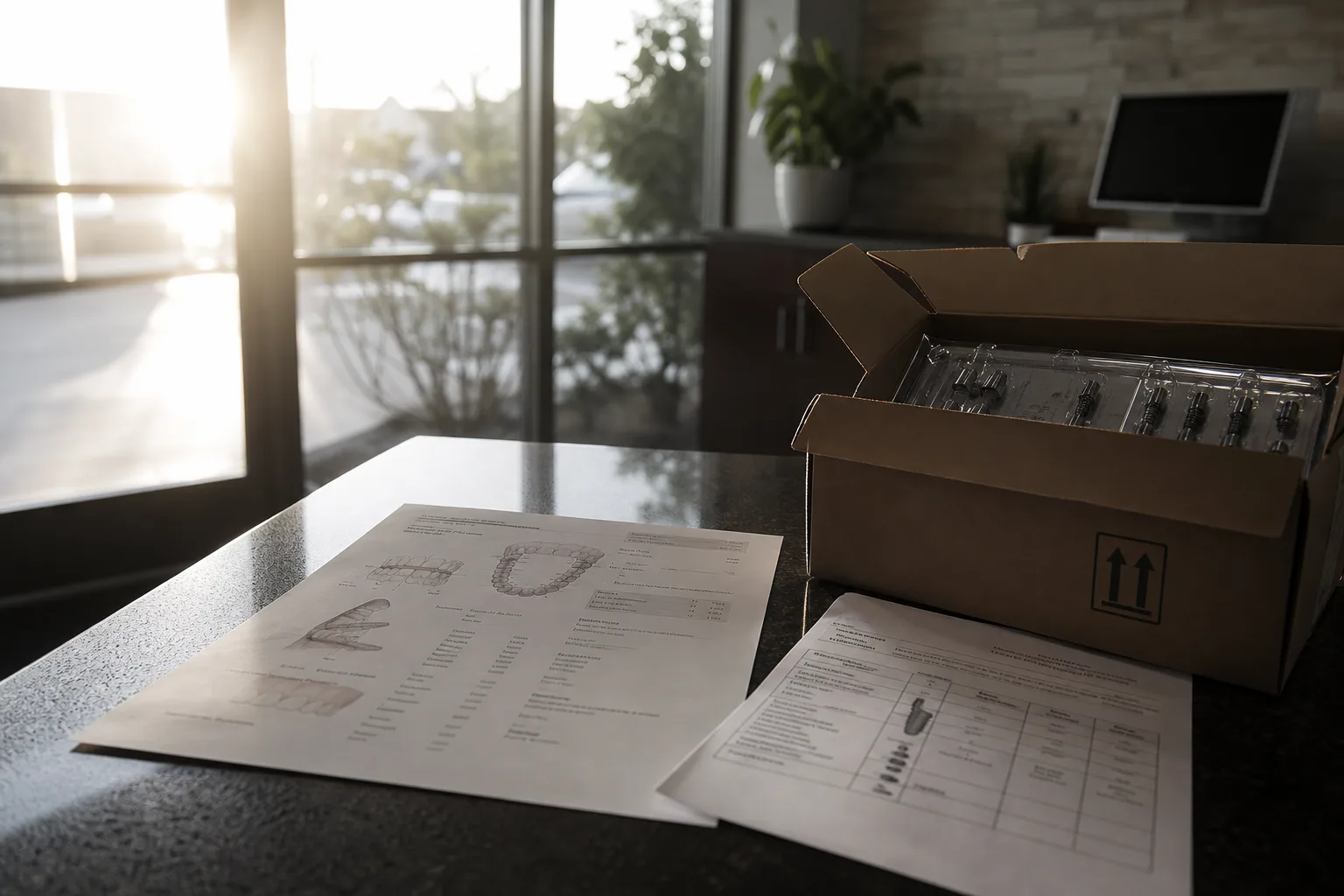
A course of treatment is not a purchase, it is a schedule of purchases, and the number you are given at the consultation is a forecast of what a series of appointments will cost across weeks or months. That distinction matters because the clinic is quoting labor it controls and materials it does not. Chair time, staffing and overhead are reasonably predictable inside a quarter. The implant abutment, the custom orthotic, the compounded injectable and the milled restoration all arrive from somewhere else, on someone else's calendar, at someone else's price.
The quote is three different kinds of money wearing one label
Read a treatment plan carefully and it separates into three layers. The first is the practitioner's time, priced per visit and largely stable once the plan is written. The second is consumables the clinic buys in volume and stocks: anesthetic, sutures, films, disposables, the things that sit in a cabinet. The third is outside work, meaning anything fabricated, compounded or ordered specifically for you, and this is the layer that moves. When a quoted number changes between the consultation and the final visit, it almost always changed in the third layer, not the first.
Clinics know this and handle it differently. Some quote the outside work as an allowance, an estimate that trues up when the invoice from the lab or supplier arrives. Some quote it firm and absorb the difference themselves, which is a real transfer of risk and is usually priced into a slightly higher headline number. Neither approach is wrong. What matters is that you can tell which one you are being offered, because the two look identical on a printed page until something upstream goes sideways.
What changed upstream, and why it lands three weeks later
The recent shift in this pillar has less to do with clinical practice than with how parts and preparations reach the clinic. Dental and orthopedic labs have consolidated, and a plan that once went to a lab twenty minutes away now goes to a regional facility with a longer queue and a scheduled courier. Single-source components have become more common as manufacturers rationalize their catalogs, so a substitution that used to be routine now requires a different system entirely. Sterile injectables move in and out of shortage on a cycle most patients never see. The Food and Drug Administration oversees drug and device shortage reporting, and clinics increasingly plan around those signals rather than reacting to them.
The lag is the part that catches people. A supplier's allocation notice in one month does not affect the patient sitting in the chair that week; it affects the patient whose second-stage appointment falls five or six weeks out, after the clinic's existing stock is consumed. So a course of treatment that began smoothly can hit friction in the middle for reasons that were already in motion before the first visit. Practices that schedule well now order case-specific components at the treatment planning stage rather than at the appointment, which is why some plans ask for a materials deposit early.
Substitution is where the number actually changes
When the specified item is unavailable, three things can happen, and each carries a different cost. The clinic waits, which costs you time and sometimes an extra visit. The clinic substitutes an equivalent, which may cost more or less and may carry a different warranty from a different manufacturer. Or the clinic changes the approach, which is a clinical decision with a new price attached. Ask, before you commit, what the substitution policy is: whether you are consulted, whether you can decline, and whether the warranty on the finished work follows the original component or the replacement.
That warranty question is worth pressing. A restoration, an appliance or a device typically carries a manufacturer's coverage on the part and a separate assurance from the practice on the workmanship, and those two often have different durations and different claim routes. If a substitution shortens the part coverage, you have quietly accepted a smaller warranty for the same price. Practices that have thought this through will tell you plainly, in writing, and some will match the original terms themselves.
Building the judgment rather than collecting the quotes
Comparing two treatment plans line by line rewards the clinic that itemizes least. The better exercise is to ask each practice the same four supply questions: which components are ordered specifically for you, what the current lead time on those is, what happens to the price if they change, and what happens to the schedule if they are late. The answers separate a practice that tracks its own supply chain from one that discovers a problem when the box does not arrive. That difference shows up in your calendar long before it shows up in your bill.
Ask for the outside-work items to be named in the plan, with the allowance stated, and ask whether the deposit is held against those specific orders. A clinic that can answer without checking has already done the work you are trying to price.
Further reading
- . Booking a Facelift for the Quiet Season? What the Consultation Tells You Before the Deposit.
- . Four Documents, One Clinic Visit. Which One Actually Tells You What You Were Charged For.
- . Quoted a Course of Treatment? Three Ways the Price Is Built, and What Moves It.
- . A Backordered Furnace and a Substituted Model. Which Papers You Keep, and For How Long.