A Backordered Furnace and a Substituted Model. Which Papers You Keep, and For How Long
Abstract. When a specified furnace is unavailable and a different model goes in, four documents start four different clocks. Here is what each one is good for and how long it stays useful.
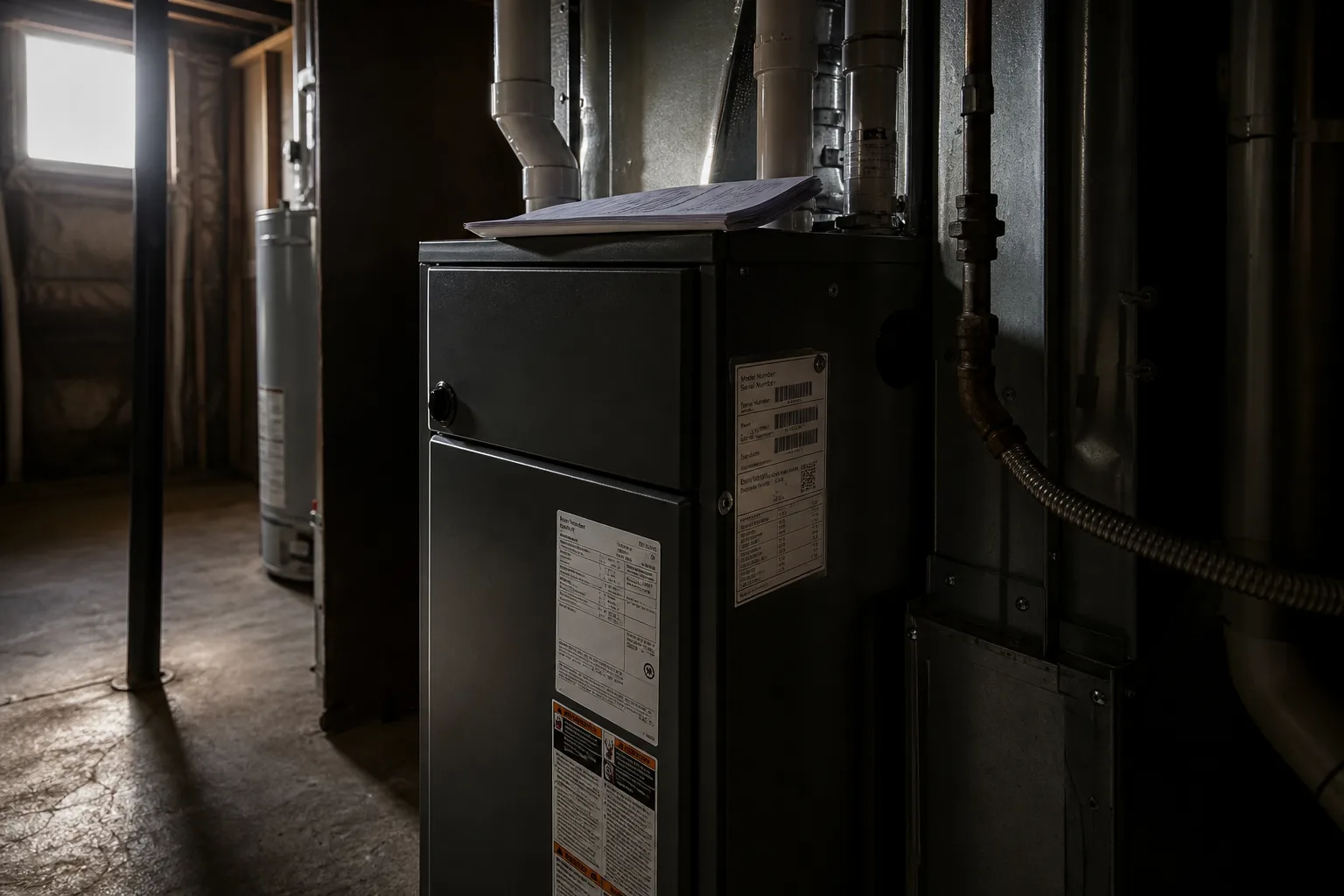
The most consequential piece of paper in a heating replacement is rarely the invoice. It is the one that says the equipment installed was not the equipment quoted. Distribution on residential HVAC has been unpredictable enough in recent years that substitution is routine: the specified model sits three weeks out at the regional warehouse, the crew is booked, the house is cold, and a comparable unit goes in instead. That single decision, made on a Tuesday morning by a dispatcher you never speak to, determines which documents you will need years later, and how long each of them is worth keeping.
The substitution is what creates the record
If the model on the proposal is the model on the equipment tag, your paperwork is simple and largely interchangeable. Substitution breaks that. Now there are two model numbers in circulation, one on the document you signed and one on the metal in your basement, and every downstream question turns on reconciling them. Warranty terms attach to the installed unit, not the quoted one. So do efficiency ratings, rebate eligibility, and the parts list a technician will pull from in year six. A written change order naming the replacement model, the serial number, and any change in price is the hinge the rest of the folder swings on.
Get it in writing while the truck is still in the driveway, because verbal substitutions are where the risk quietly transfers to you. If the swapped unit is a lower efficiency tier and a utility rebate is denied, the question of who absorbs that loss is decided by whether anyone documented the change and what it said. Contractors who handle this well issue a revised proposal rather than a note on the back of the invoice. That version costs nothing extra and is far easier to hand to a rebate administrator, an inspector, or an adjuster.
Four documents, four clocks
The change order and revised proposal are useful for as long as money could still move between you and the contractor, which in practice means through the workmanship warranty period and any window your state allows for construction defect claims. The manufacturer's specification sheet for the installed model, printed or saved as a PDF, stays useful for the life of the equipment, because it carries the ratings a rebate or resale disclosure will ask about. The commissioning or startup report, showing static pressure, temperature rise, and refrigerant charge where applicable, matters most in the first two years, when a performance complaint is still arguable. The warranty registration confirmation outlives all of them.
Those clocks do not run together, and treating them as one pile is how households end up with a decade of invoices and none of the four things a claim actually requires. The practical division is simple enough. One thin file holds the identity of the equipment and its warranty status, kept for as long as the unit is in the house. A second holds the money: proposal, change order, final invoice, lien waiver, permit and inspection record. The second file has a longer tail than most people expect, because it is also a tax record.
The registration window is the shortest and least forgiving
Most manufacturers offer an extended parts warranty only if the equipment is registered shortly after installation, and the window is typically measured in weeks or a couple of months rather than years. The exact period, and who is responsible for filing, are stated on the warranty certificate that ships with the unit. Where a substitution has occurred, the registration must reference the serial number actually installed, which is precisely the detail that gets mistyped when a dispatcher is working from the original order. Ask for the registration confirmation email, not a promise that it was handled. The Federal Trade Commission oversees how consumer product warranties are disclosed, and the certificate is written to be read.
What a buyer's inspector and the IRS each want from the same folder
A capital improvement adds to the basis of your home, and the IRS is responsible for the rules on what records substantiate that basis when the property is eventually sold. Those records stay useful for as long as you own the house, plus the period during which the sale year's return remains open to examination. That is a much longer horizon than the warranty. A buyer's inspector, meanwhile, wants the equipment tag, the permit and final inspection, and evidence the installed model matches what was disclosed. The substituted furnace passes both tests easily when the change order is in the file.
Scan the four documents once, name the files with the model and serial number, and the next person who needs them, a technician, an appraiser, an adjuster, or you at closing, finds the answer in a minute instead of a weekend.
Further reading
- . Booking a Facelift for the Quiet Season? What the Consultation Tells You Before the Deposit.
- . Four Documents, One Clinic Visit. Which One Actually Tells You What You Were Charged For.
- . Quoted a Course of Treatment? Three Ways the Price Is Built, and What Moves It.
- . Checking a Clinician's License? What the Board Actually Verified, and What It Never Did.