Signing With a Bigger 3PL? Where the Extras Hide in a Fulfillment Quote
Abstract. A fulfillment quote is three documents pretending to be one page. Here is how to read the rate card, the scope and the surcharge schedule before you sign.
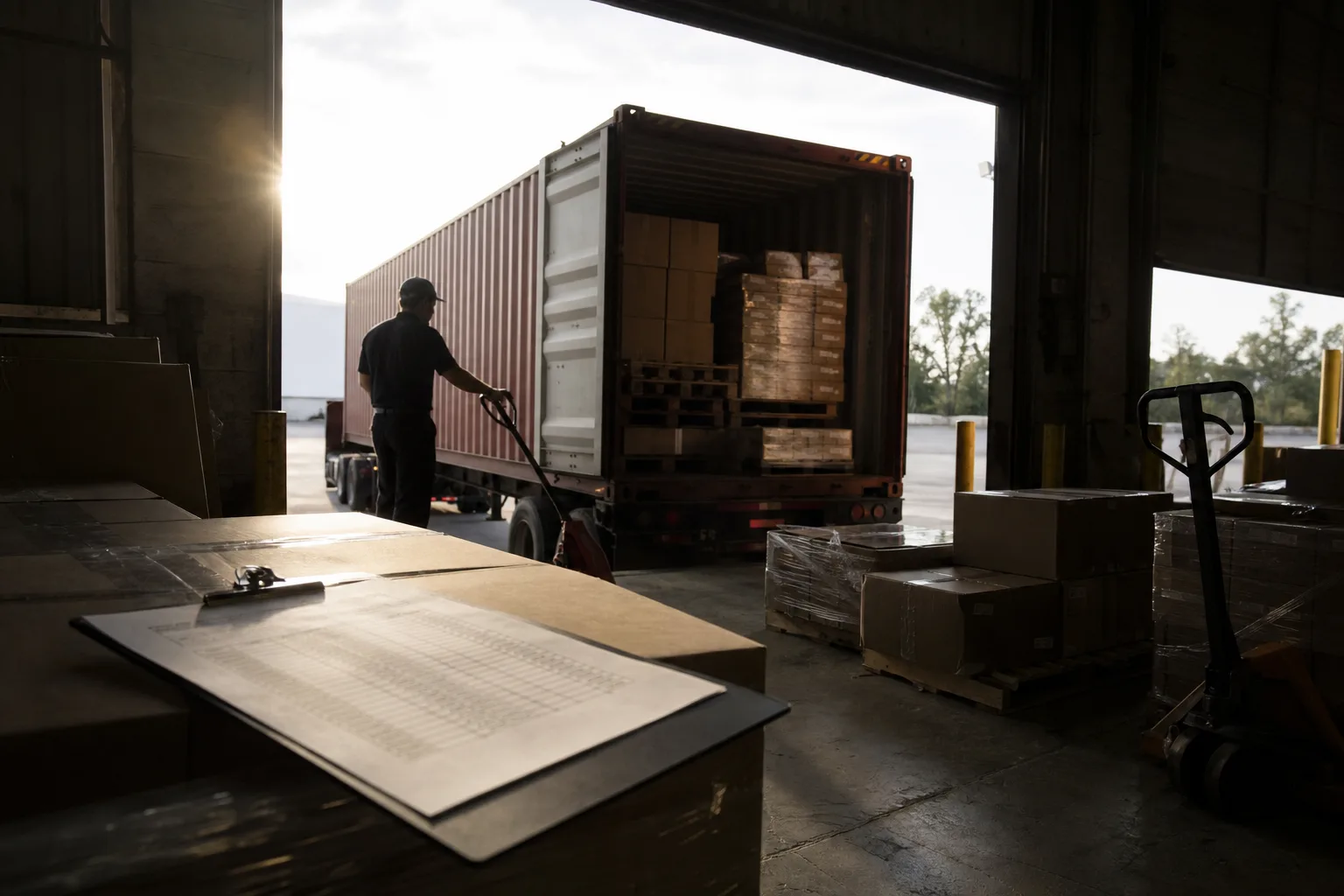
The number a third-party logistics provider puts in front of you is usually honest and almost never complete, because the quoted pick and pack rate describes one clean event: a single-line order, in a standard carton, picked from a location the warehouse already knows about. Everything your business actually does that departs from that event has a price somewhere else in the paperwork. Larger providers are generally better at disclosing those prices than small ones, since they run a published surcharge schedule rather than deciding case by case, but disclosure and visibility are different things. The schedule is often an appendix.
Treat the quote as three separate documents, because it is
What arrives as a proposal is really a rate card, a scope of work, and a surcharge schedule, bound together for convenience. The rate card carries the numbers you will compare against a competitor: receiving per pallet or per carton, storage per pallet position per month, pick and pack per order with a per-additional-unit adder, and a returns processing fee. The scope of work defines what counts as normal, which is where the real money sits. The surcharge schedule prices every departure from normal. Read them in reverse order, starting with the surcharges, and the rate card stops looking like the decision.
Ask which document governs when they conflict, and get the answer in writing before signing anything. At a larger provider the rate card is often negotiable within a band while the surcharge schedule is standardized across hundreds of accounts and effectively is not, because it reflects labor standards the operations side has already costed. Knowing which lever actually moves saves a month of pointless back and forth. It also tells you something useful about the organization: a provider whose exception pricing is fixed has usually measured the exceptions.
The people sitting next to your decision, and which of them you will actually deal with
You will be sold by a solutions consultant, onboarded by an implementation manager, and then handed to an account manager who owns the relationship but does not control the floor. Behind them sit an inventory control lead, a shift supervisor, and a transportation analyst who negotiates carrier rates in volumes you will never see individually. That separation is the main advantage of going with a larger provider and also the thing that surprises people. The person who promised you flexible receiving in April is not the person deciding, in October, whether your floor-loaded container gets unloaded today or Thursday.
So find out during the sales process who holds the exception authority and what it costs to reach them. Specifically: can your account manager waive a receiving surcharge, or does that require a director; what is the documented response window for an inventory discrepancy; and who calls you when a carrier misses a pickup rather than waiting for you to notice. Larger organizations answer these questions cleanly because they have written procedures for them. Ask for the escalation path as a named sequence of roles, then keep it, because you will use it.
Where the extras actually appear
Inbound is first. A container that arrives floor-loaded instead of palletized, or without a carton label the warehouse management system can read, converts a routine receipt into manual work billed by the hour, and the hourly rate for unscheduled labor is not the rate buried in your pick fee. Relabeling, repacking into retailer-compliant cases, kitting, inserts, gift notes, serial capture, and lot tracking are all priced separately at nearly every provider of scale. So is long-term storage past a stated threshold, and so is a minimum monthly charge that protects the provider when your volume dips below forecast.
Outbound extras cluster around dimensions and destinations. Dimensional weight means an oversized but light carton bills on volume, residential delivery carries its own fee, and remote area surcharges apply to ZIP codes you may sell into more than you think. Peak season surcharges are published in advance by the national carriers and passed through. Returns are the line most often underestimated: receiving, inspecting, grading, restocking or disposing, and crediting are five distinct tasks, and a quote that prices returns as a single number is telling you it has averaged them.
How an upstream delay turns into a downstream charge
A factory slips two weeks, your freight forwarder rebooks onto a later sailing, and the consequence lands in your fulfillment invoice about three weeks after that, in forms nobody warned you about. Your replenishment purchase order and your original order now arrive in the same storage month, so you pay for pallet positions twice over on inventory you meant to have sold through. The warehouse absorbs an unscheduled receipt, which is surcharged. You air freight a partial to cover the gap, which arrives in mixed cartons requiring sortation, which is surcharged again. Then split shipments double your per-order pick cost.
None of this is the provider behaving badly. It is the cost of variability being allocated to the party that created it, which is the correct allocation, and the reason to know the schedule in advance is so you can price the delay when you first hear about it rather than discovering it in accounting. The Federal Trade Commission oversees the rules governing how quickly sellers must ship what they have promised, which means an upstream slip is your compliance exposure, not the warehouse's. Build the surcharge arithmetic into the substitution decision at the point the factory calls.
Test the quote before you sign it
Take a real month of order history, including the ugly week, and ask the provider to price it line by line against the full schedule. A serious operator will do this, and the exercise reveals whether your order profile fits their standard. Ask what percentage of your orders would have triggered an exception fee. Then ask what would have to change on your side to remove them, because the answer, usually about carton sizing or inbound labeling, is work you control and can do once.
Further reading
- . Can't Stand at the Curb to Inspect a Pallet? The Delivery Receipt Decides Who Pays.
- . Can't Lift a Pallet Anymore? Who Actually Handles Your Stock Once a Third Party Stores It.
- . Hiring an Outside Specialist? Five Checks That Separate Good From Merely Plausible.
- . Hiring Your First Outside Expert in Busy Season? What the Calendar Adds to the Bill.