Your First Breach Letter, and the Everyday Trouble Nobody Traces Back to It
Abstract. A breach notification's real costs show up months later as a declined autopay, a rejected tax return or an unfamiliar claim. What each exposed data type actually leads to.
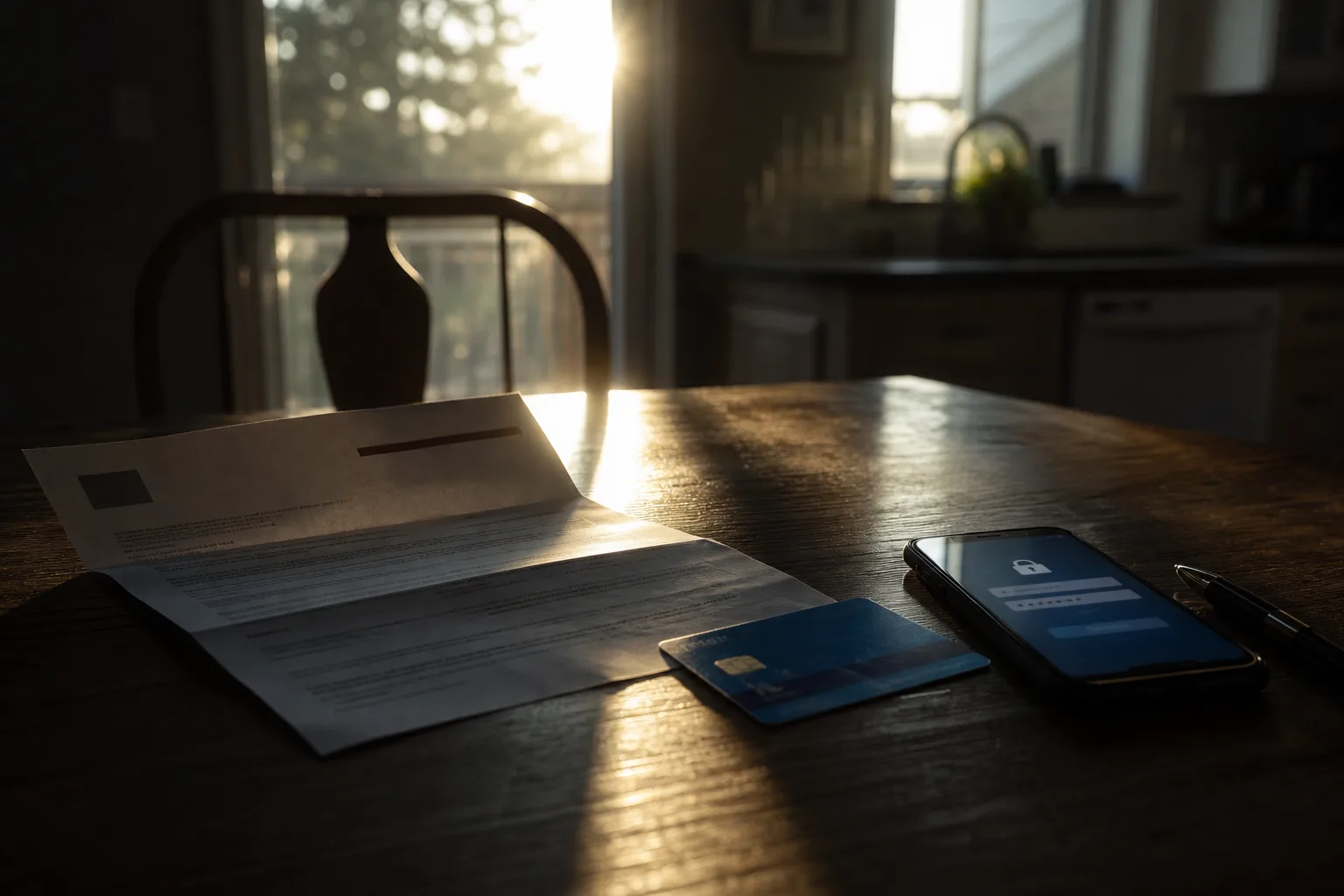
The consequences of a data breach almost never arrive with the breach's name attached. They show up as a card declined at the pump, a tax return rejected within an hour of filing, an unfamiliar explanation of benefits from an urgent care clinic three states away, or a storage unit auctioned because the autopay failed and the notice went to an old email. Somebody reading a breach letter for the first time is looking for the part that tells them what to do, and the letter is generally written to say as little as the law allows. The useful reading is comparative: what was taken, and what that specific category of data lets someone do.
Before anything else, verify who is actually writing to you
A breach notice is one of the few pieces of mail that instructs you to enter your Social Security number on a website you have never visited, which is exactly what a convincing fraud attempt would also do. Most states require notified companies to file a copy of the notice with the state attorney general, and many of those offices publish a searchable list of filings, so the first check is whether a letter matching yours exists in a public database. The second is whether the company has posted its own notice on its main domain, reached by typing the address yourself. The enrollment site named in the letter should belong to a firm you can find independently, with a real corporate address and a phone number that answers.
Check what the monitoring vendor is actually credentialed to do, because the term covers very different products. Some enrollment offers come from one of the three nationwide consumer reporting agencies, which means the alerts are drawn from a file you can also obtain yourself; others come from resellers who watch a single bureau, or who scan criminal marketplaces and report matches without any bureau relationship. Ask which bureaus are covered, whether the service includes restoration help with an assigned case handler, and whether that handler is a licensed investigator or a call center reading a script. A vendor that will not answer those questions in writing has told you what the coverage is worth.
Credentials and card numbers: the mild categories that still cost you a weekend
An exposed email address and password looks like the harmless end of the range, and in isolation it is, provided that password was used exactly once. Reuse is what turns it into a chain, because the pair gets tried against banks, retailers and, most damagingly, the email account that receives every password reset you will ever request. The everyday consequence people rarely trace back is not a drained account but a locked one: a streaming service reclaimed, a rewards balance spent, a shopping account whose saved address was changed to somewhere else. Fixing that means proving you are you to a support queue with no interest in your version of events.
A payment card number is the category with the clearest allocation of risk, and it favors you. Federal rules cap your liability on unauthorized credit card charges at a low fixed amount, and in practice issuers write off disputed charges rather than argue, so the loss lands on the issuer and the merchant. What lands on you is the reissue. A new card number breaks every recurring charge attached to the old one, and the ones you notice are the streaming subscriptions, while the ones you do not notice are the auto insurance installment, the umbrella policy, the alarm monitoring and the term life premium. A lapsed policy discovered at claim time is a far bigger number than the fraud ever was.
Social Security number, date of birth and license number: the slow category
This is the group that behaves differently, because the data does not expire and cannot be reissued the way a card can. The consequences arrive months or years later and arrive as accusations rather than losses: an e-filed return rejected because one was already accepted under your Social Security number, an unemployment claim filed in your name against a current employer, a utility account opened in another county and sold to collections, a duplicate driver's license issued in a state you have never lived in. Each of these puts you in the position of proving a negative to an institution that has already recorded the other version.
The Federal Trade Commission is responsible for the federal identity theft reporting system, and a report filed there produces a written recovery plan and an affidavit that banks, collectors and credit bureaus generally accept as the starting document. That affidavit is what converts your phone calls into a paper record, which matters because the burden of correction sits with you and the disputes are resolved on documents. For the tax side, the remedy is a separate identity protection PIN issued by the IRS, which blocks a return filed without it. Neither remedy is expensive. Both are slow to arrange after the fact and quick to arrange before.
Health and insurance records: the category the monitoring product does not cover
Breaches at a provider, a billing contractor or a health plan expose member numbers, diagnosis codes and claim histories, and none of that appears in a credit file. Credit monitoring will not flag treatment billed to your plan by someone else, so the discovery usually comes from an explanation of benefits describing care you did not receive, or from a deductible that is somehow already met in March. The downstream problem is the record itself: entries made under your name during someone else's treatment sit in a chart that later clinicians read. Correcting that runs through the provider's medical records office and the plan's fraud unit rather than the bureaus, and the request should be in writing with a copy retained.
Comparing the remedies by what each one actually blocks
A credit freeze is free at each of the three nationwide bureaus, is placed and lifted by you, and stops most new accounts from being opened, which makes it the right match for an exposed Social Security number. It does nothing about existing accounts, tax filings or medical claims. A fraud alert is weaker, lasting a year and only obliging lenders to take extra verification steps, but it is worth adding for someone who expects to apply for credit soon and does not want the friction of thawing. Monitoring detects rather than prevents, so it is the right answer for exposures a freeze cannot reach, and its value depends entirely on the coverage you confirmed before enrolling.
Keep the letter itself, dated, with the enrollment code intact. It establishes when you were told, which is the fact that decides whether a later disputed account was opened before or after you had notice, and it is the document a class settlement administrator will ask for if one is ever announced. Filed with a note of what you did and when, it turns a vague worry into a record you can hand to someone.
Further reading
- . Breach Notices Arrive Earlier and Say Less. What That Changes About Your Costs.
- . The Notification Clock Slipped a Week. Where That Shows Up on the Invoice.
- . Got a Breach Letter and No Straight Answers? Who Wrote It, and Why Waiting Helps.
- . Breach Letter Over the Holidays? The Steps You Can Finish Sitting Down.