Breach Notices Arrive Earlier and Say Less. What That Changes About Your Costs
Abstract. Shorter disclosure deadlines mean breach letters now land mid-investigation, which moves your real cost from fees to lead times and from one afternoon to several.
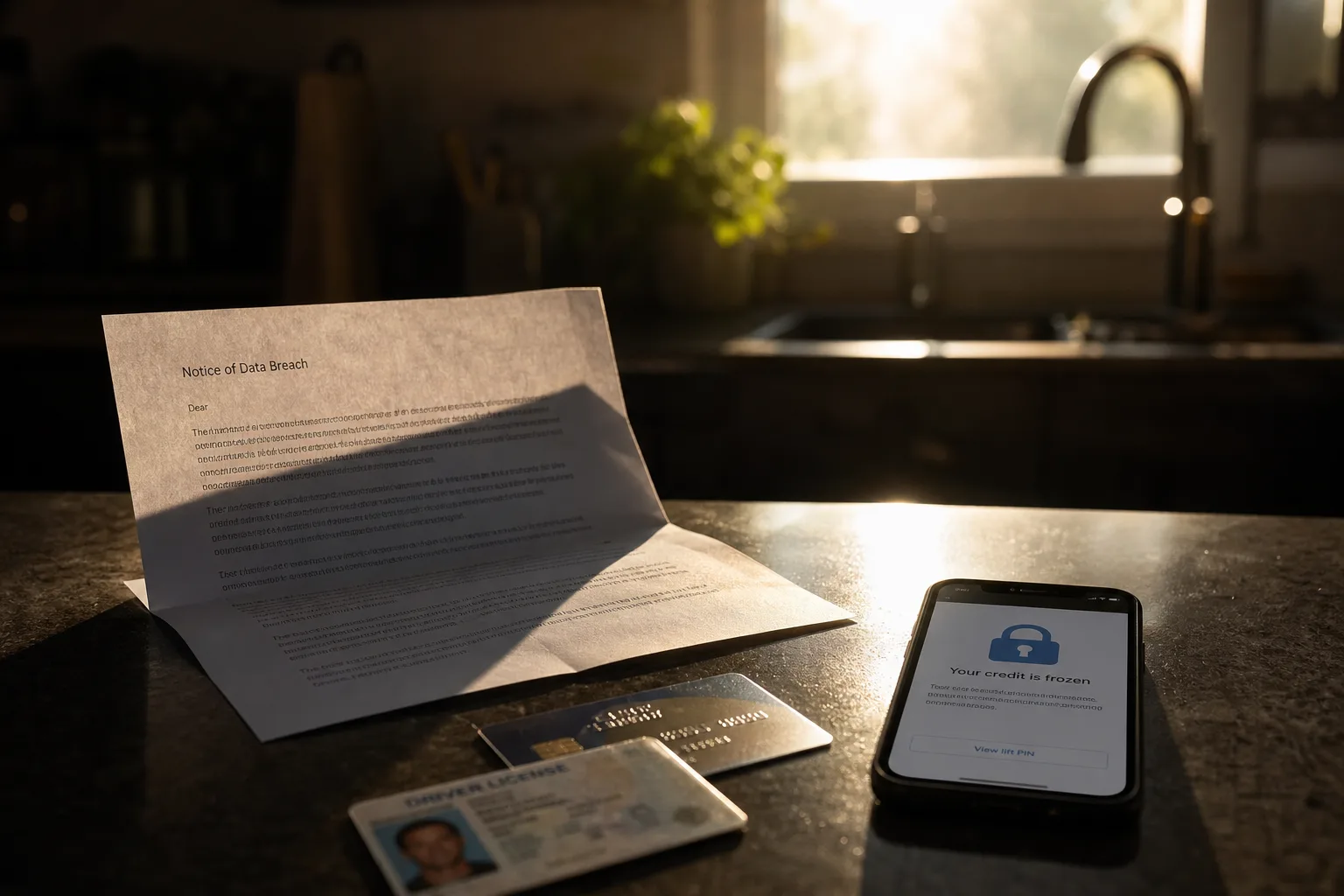
A breach letter is a shipment from a supply chain you never audited, arriving on a schedule set by someone else's lawyers. The envelope looks like correspondence. It behaves like a delivery notice: something upstream of you failed weeks or months ago, the consequences have been in transit since, and the date on the letter tells you almost nothing about when the exposure began. The useful question is not whether to worry. It is what this specific notice obligates you to spend, in dollars and in calendar time, and which of those costs grow if you wait.
The letters got faster, which made them vaguer
Disclosure timing has tightened across several regimes at once, and the direction of travel is consistent. Publicly traded companies now face a short, fixed window to report material cybersecurity incidents after determining materiality. Nonbank financial institutions covered by the Safeguards Rule have their own reporting trigger. Health care entities have long worked to a defined outer limit, and state attorneys general have been shortening their own deadlines. The effect on your mailbox is predictable. Notices are now drafted while the forensic investigation is still open, which means they describe categories of data that may have been affected rather than a confirmed inventory of what left.
That hedged language is not evasion so much as sequence. The breached company is buying disclosure compliance with a letter that its own incident responders cannot yet fully support, and the specifics arrive later, in an amended notice or a settlement administrator's mailing, sometimes long after you filed the first letter away. Plan for a second letter. The practical consequence is that your response has to be built on the worst plausible reading of the first one, because correcting course after an amended notice costs more than over-responding once.
What the cost is actually made of
The dollar figure attached to a consumer breach response is usually small and the time figure is usually large, and people budget for the wrong one. What drives both is the data class. A leaked email address and a password hash is a rotation problem: you change credentials wherever that password was reused, and the work is bounded by how disciplined your password hygiene already was. A Social Security number, a driver's license number, or a date of birth is a different category entirely, because those identifiers are static. You cannot rotate them. The response shifts from fixing an exposure to monitoring a permanent one, and monitoring has no end date.
Medical and insurance records sit in a third category, where the exposure affects billing records and claims histories you do not routinely review, and where discovery often happens through an explanation of benefits rather than a credit alert. Payment card numbers, oddly, are the cheapest outcome, because the card network's liability rules and the issuer's reissue process absorb most of the work. That is the pattern worth internalizing: the less a data element can be reissued by someone else, the more of the cost lands on you.
The fees that disappeared and the ones that did not
The single largest consumer-side change of the last several years is that placing and lifting a security freeze at the nationwide credit bureaus is free, in every state, for everyone. That removed what used to be the main cash cost of a serious breach response, and it removed the argument for paying for credit monitoring as a substitute for a freeze. Monitoring tells you after something happened. A freeze prevents most of it. The complimentary monitoring enrollment in the letter is worth taking because it costs nothing, but it is not the control, and treating it as one is the most common and most expensive misreading of these notices.
Real money still appears in specific places. Replacing a compromised driver's license number means a trip to the DMV and a replacement fee, and a new number is not always available. Passport replacement carries a federal fee. Identity theft affidavits sometimes need notarization, new checks need ordering, and a disputed tax return filed in your name means correspondence with the IRS and, often, an Identity Protection PIN going forward. If the matter reaches an attorney or a tax professional, that is billable time, and it is the only line item here that can grow without a ceiling.
Lead time is the cost nobody schedules
Every remedy in this list is throttled by somebody else's queue. A DMV appointment is scheduled weeks out in many jurisdictions. Passport processing runs on published service standards that move with demand. A bank's replacement card ships on a cycle you do not control, and an IRS identity theft case does not resolve on your preferred timeline. The complimentary monitoring enrollment code in the letter expires, usually inside a fixed window from the mailing date, which means a letter that sits on the counter for six weeks can quietly forfeit the one thing the breached company paid for on your behalf.
So order the work by lead time rather than by severity. Freeze first, at all three nationwide bureaus, because it is free, immediate, and reversible. Redeem the enrollment code second, before the window closes. Then rotate every credential that shares a password with the breached account, and only then start the slower items: the DMV, the passport, the new account numbers. The Federal Trade Commission is the federal agency responsible for consumer identity theft response and maintains the standard recovery process, which is the reference point worth using when a letter is vague about what you should do.
File the letter where you can find it. If an amended notice arrives, or a settlement administrator writes a year later asking for documented out-of-pocket losses, the original envelope, the dates, and a short log of what you did and what it cost become the evidence that turns a claim form into a payment.
Further reading
- . The Notification Clock Slipped a Week. Where That Shows Up on the Invoice.
- . Got a Breach Letter and No Straight Answers? Who Wrote It, and Why Waiting Helps.
- . Breach Letter Over the Holidays? The Steps You Can Finish Sitting Down.
- . Your Breach Letter Is Dated in March and the Exposure Started in October. What Happened in Between.