Filing a Complaint? The Proof That Decides It Is Not What It Was in 2015
Abstract. A decade ago a dispute file was built by hand, on foot, and in person. What replaced that is easier to gather and easier to lose.
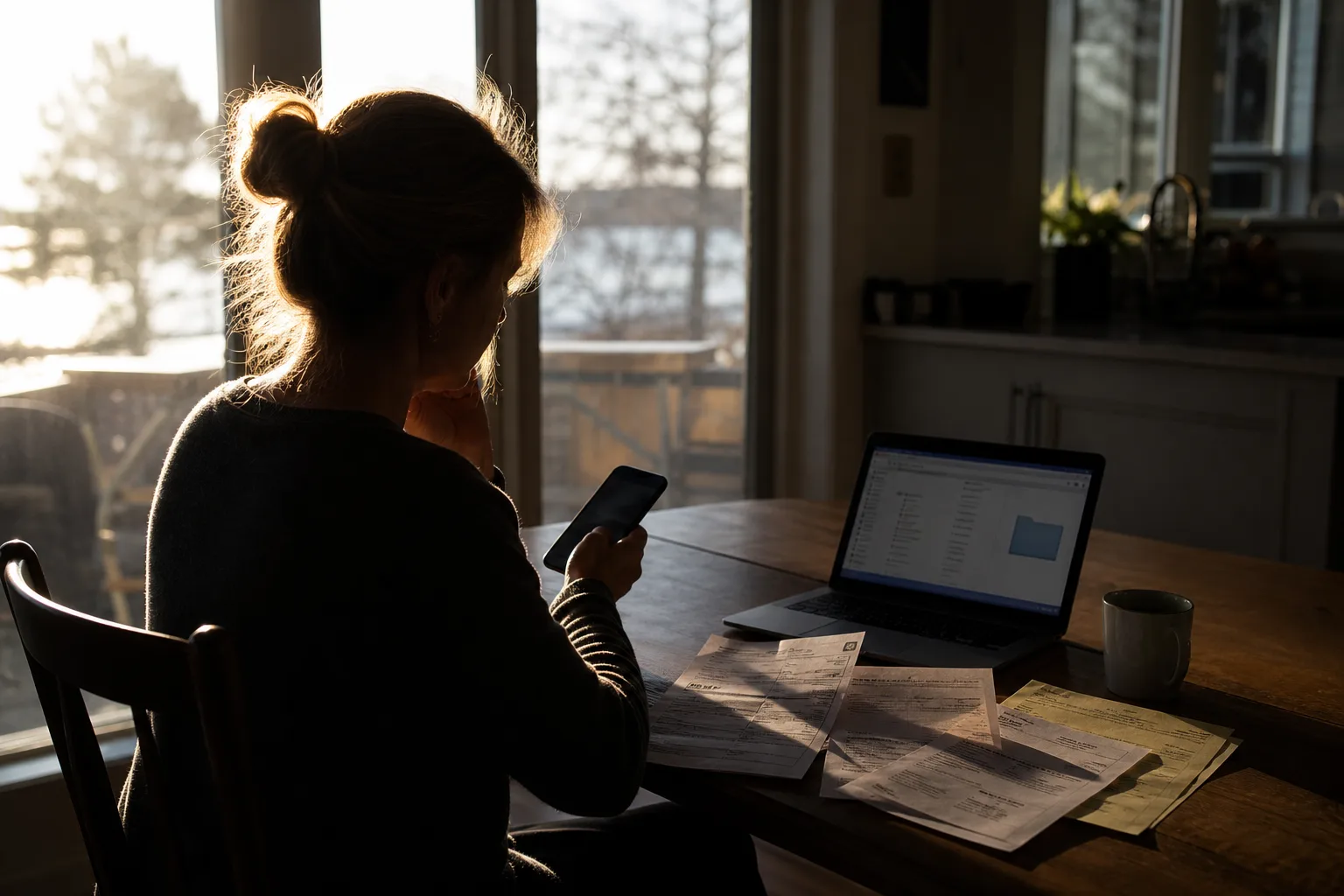
The file that settles a dispute is usually assembled before anyone knows there is a dispute. That was true a decade ago, when it meant a shoebox of carbon-copy work orders and a phone bill annotated in pen, and it is true now, when it means a camera roll, a chat transcript, and a portal login that expires. What changed is not the standard applied to the evidence. What changed is who can physically collect it, how long it survives, and how easily the other side can say your copy is not the record.
What a dispute file cost you in effort ten years ago
Building proof used to be a physical task, and the physicality was the barrier nobody named. You went to the county recorder's counter and stood in line for a certified copy. You climbed to the second-floor landing to photograph the stain where it started, or you paid someone to climb for you and hoped they framed it usefully. You mailed a letter certified, which meant a trip to the post office and a signature at a height set for someone standing. A person who could not climb, lift, or stand and wait was quietly priced out of the strongest version of their own case, and the price was paid in weaker evidence rather than in dollars.
The compensations were real but partial. You could send a friend, hire a public adjuster, or ask the contractor for his own photos and accept that he chose which ones to keep. Each of those moves put a stranger between you and the record, and every intermediary is a place where a fact loses its date, its author, or its context. Adjusters and arbitrators do not discount evidence for cruelty. They discount it because it arrives without provenance, and secondhand collection is the most common way provenance goes missing.
What the same collection asks of you now
Most of the climbing is gone. A doorbell camera records the delivery driver who left the pallet in the driveway rather than the garage, so no one has to be at the door at the time. A phone held at waist height captures a timestamp, a location, and a resolution that makes a hairline crack legible when enlarged, which removes the need to get close to it. Utility and insurance portals now issue letters as downloadable files rather than as paper you must retrieve from a mailbox at the curb. A person who cannot stand and wait can now assemble, from a seated position in one afternoon, a record that in 2015 would have taken three trips and a favor.
The tradeoff is that the new record is thinner than it looks. Volume has gone up and attributability has gone down. Two hundred photographs of a bathroom are not two hundred pieces of evidence; they are one piece of evidence repeated, and none of them shows the meter reading, the date on a newspaper, or the reference point that fixes them in time for someone who was not there. Messaging apps compress images and strip the embedded data that would have dated them. A screenshot of a chat shows the words and hides the account, the time zone, and whether anything was scrolled past. The work has moved from the legs to the filing.
The three kinds of evidence that still hold
First, contemporaneous records made for a purpose other than the dispute. A dated invoice, a service ticket, a bank statement, a permit inspection sign-off, a text you sent the day of asking when the crew would arrive: these persuade because they existed before anyone had a reason to shade them. Second, the other side's own words, in their own system. An email from the contractor's address conceding the tile was ordered late is worth more than your careful memory of the same sentence spoken in a driveway, and a portal message saved as a PDF with the header intact is worth more than a photo of a screen. Third, an independent party with no financial stake in the outcome, which is why an engineer's letter carries weight a neighbor's opinion does not.
What fails is predictable. Recollection fails, because it is undated and interested. A photograph with no reference object fails, because the adjuster cannot tell whether the gap is a quarter inch or an inch and a half. An audio recording made where the other party did not know fails in some states outright, and a written summary of a phone call fails unless you sent it to the other side at the time and they did not correct it. That last move, the confirming email sent the same afternoon, converts a conversation into a document, and it is the single cheapest thing an experienced complainant does.
The clock nobody sets, and how to set it
The evidence most likely to decide a modern dispute is also the evidence most likely to erase itself. Cloud video plans overwrite on a rolling window, often measured in days rather than months. Chat transcripts with a service rep live inside a session that closes. Portal access is frequently tied to an active account, which means canceling the service after the argument can lock you out of the proof of the argument. Ten years ago paper sat in a drawer until you threw it away; now the default is deletion, and the burden of interrupting it falls on the person who will later need the record.
So the first action after something goes wrong is not the complaint. It is the export. Download the video clip to local storage, request the chat transcript by email before you close the window, save the portal statement as a file, and photograph the paper you were handed on site before it goes soft in a truck. Keep them in one folder named for the address and the date, because the second most common failure after deletion is a file that exists and cannot be found on the day it is needed. The Federal Trade Commission oversees consumer complaint practices and the reporting channels that sit behind them, and the intake questions on any formal route track the same shape: what happened, on what date, what did you pay, and what did they say.
Who is being asked to trust you
The reader of your file is a stranger with a queue, deciding whether to move money that is not theirs. An adjuster releasing a payment, a card issuer reversing a charge, a licensing board opening a case: each needs to defend the decision internally, which means your file has to survive being read by their supervisor without you present. That is the real test, and it explains why a short, dated, sourced record beats a long and heartfelt one. Write the chronology in plain sentences, attach the documents in the order they are mentioned, and state what you want done. Experienced complainants keep it under two pages, because they know the attachments carry the argument.
The person who has run a dozen of these does not gather more than anyone else. They gather earlier, they date what they gather, and they keep a copy somewhere the other party cannot switch off. Done that way, the file is finished before the dispute starts, and the physical demands that used to shape whose evidence was any good have largely stopped mattering.
Further reading
- . Asked Your Landlord for a Ramp and Been Refused? What the Legal Quote Actually Covers.
- . Winter Damage, Thin Proof? The Dated Records Someone Else Is Already Keeping for You.
- . Quoted an Hourly Rate? What That Number Is Attached To, Week by Week.
- . Quoted a Flat Fee for Legal Work? What That Number Is Actually Measured Against.