Deciding Whether to Settle? The Local Rules That Change the Math Before the Money Does
Abstract. Settlement offers get judged against the claim, but what the remaining route asks of you physically, and what your county's rules require, moves the number more.
Most people weigh a settlement offer against the claim itself: sixty cents on the dollar, or forty, and then a judgment about whether the rest is worth chasing. That comparison leaves out the variable that moves most between one address and the next, which is what the remaining route asks of the person who has to walk it. Two claimants with identical facts, identical damages and identical offers can face very different costs to continue, because the county they filed in handles appearances, mediation and fee awards differently. The offer is one number. The forum sets the other.
The assumption that the discount is the whole comparison
The common way of thinking about settlement treats the decision as arithmetic on a single line: what is offered, against what a win would pay, discounted by the odds. That framing is not wrong so much as incomplete, because it silently assumes the cost of continuing is the same for everybody, and it is not. Continuing costs time, transport, filing fees, days off work, and, for a large number of people, physical capacity that is finite and already spoken for. When those costs are counted honestly, a mediocre offer accepted early sometimes outperforms a strong claim pursued through six appearances.
What the process asks of you before it asks about the merits
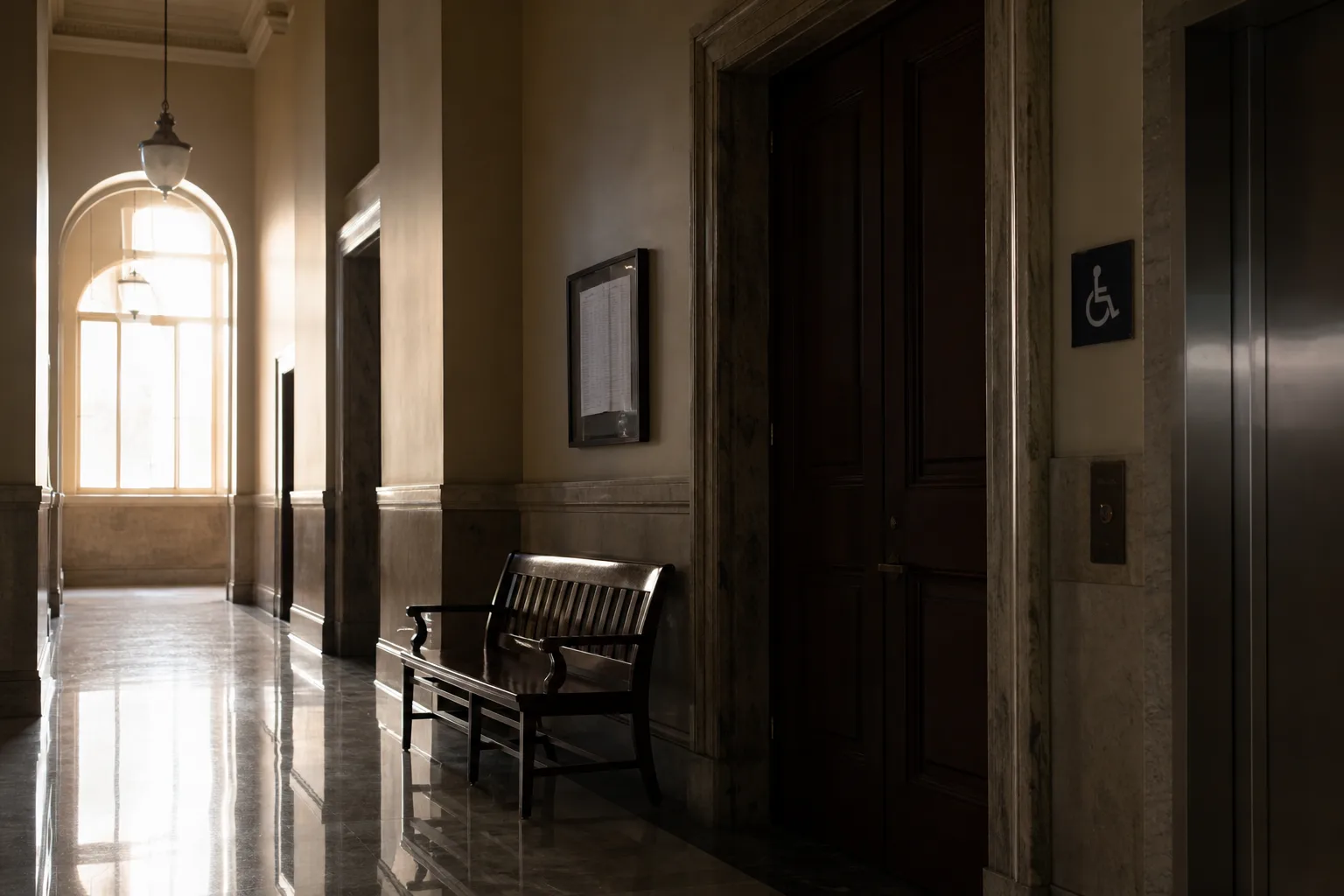
Before a court considers whether a contractor breached anything, it asks you to arrive, pass a security screening, find the right room, and be present when the docket is called. In many courthouses that means a line, a wait on your feet, and a hearing that may be continued twice before anyone hears evidence. For a person who cannot stand and wait, cannot manage stairs when an elevator is out, or cannot drive, that sequence is the real price of not settling. It is also a price the other side, if it is an insurer or a company with in-house counsel, does not pay at all.
The useful part is that this is a solvable problem, and it is solved by asking early rather than on the morning of the hearing. Courts operate under accessibility obligations that the Department of Justice is responsible for overseeing, and most systems designate a coordinator, an access office, or a clerk who handles requests for accommodations. Seating while you wait, a first-call position on the calendar, a ground-floor courtroom, a break schedule, or permission to appear by video are all things that get granted routinely when the request arrives in writing with lead time. Getting that answer in hand changes the cost of continuing, which changes the value of the offer.
Same dispute, three counties, three different answers
Local rule is where this stops being general advice and starts being your specific situation. Small claims ceilings differ by state, sometimes by several thousand dollars, and whether attorneys may appear at all in that division differs too, which decides whether you are arguing your own case or paying someone to argue it. Some jurisdictions require mediation before a trial date is assigned, and some of those conduct it by phone or video, which for many claimants is the cheapest hearing they will ever attend. Others expect everyone in a conference room on a weekday morning.
Fee exposure is the other regional split, and it is the one that moves settlement value most. A number of states have offer-of-judgment rules under which rejecting a formal offer and then failing to beat it at trial shifts some costs onto you, while other states have no such mechanism and leave each side with its own bill. Consumer protection and home improvement statutes in some states award attorney fees to a prevailing homeowner, which makes a small claim worth pursuing that would otherwise be uneconomic. Your contract may also contain its own fee clause, pointing either direction.
Building a comparison you can act on
The practical version of this takes two phone calls and one letter. Ask the clerk's office how many appearances a case like yours typically requires, whether remote appearance is available and who authorizes it, and whether mediation is mandatory before a trial date issues. Ask the access coordinator, in writing, for the accommodations you need, and keep the reply. Then look at your contract and at your state's consumer statute for any fee-shifting language, because that single provision can turn a claim you were ready to abandon into one worth filing, or warn you that pressing on carries the other side's costs.
With those answers, the ledger is honest. Against the offer on the table, set the filing fee, the paid time away, the transport you have to arrange, the number of days you will likely be required somewhere, and whether those days can be attended from home. Where remote appearance is available, mediation is early, and a statute carries your fees if you win, holding firm is comparatively cheap and the offer should be measured strictly against the merits. Where every step is in person and cost-shifting runs against you, a discount that looked insulting on paper starts looking like a fair price for finishing.
Offers carry deadlines, and clerks answer questions for free, so the two inquiries belong in the same week rather than in sequence. The claimant who knows what the courthouse will require of them, and has the accommodation confirmed in writing, is negotiating from a position the other side cannot see or price. That is a stronger place to accept from, and a stronger place to refuse from.
Further reading
- . Asked Your Landlord for a Ramp and Been Refused? What the Legal Quote Actually Covers.
- . Winter Damage, Thin Proof? The Dated Records Someone Else Is Already Keeping for You.
- . Quoted an Hourly Rate? What That Number Is Attached To, Week by Week.
- . Quoted a Flat Fee for Legal Work? What That Number Is Actually Measured Against.